
By type of garage
Roller garage doors for coastal homes
Coastal homes are houses close enough to the sea for salt air, wind-blown sand and spray to reach the garage. A roller garage door suits them well when it's specified for the conditions, with a durable factory coating, stainless fixings and seals in good order. Salt speeds up wear on exposed metal and moving parts, so a little regular care goes a long way.
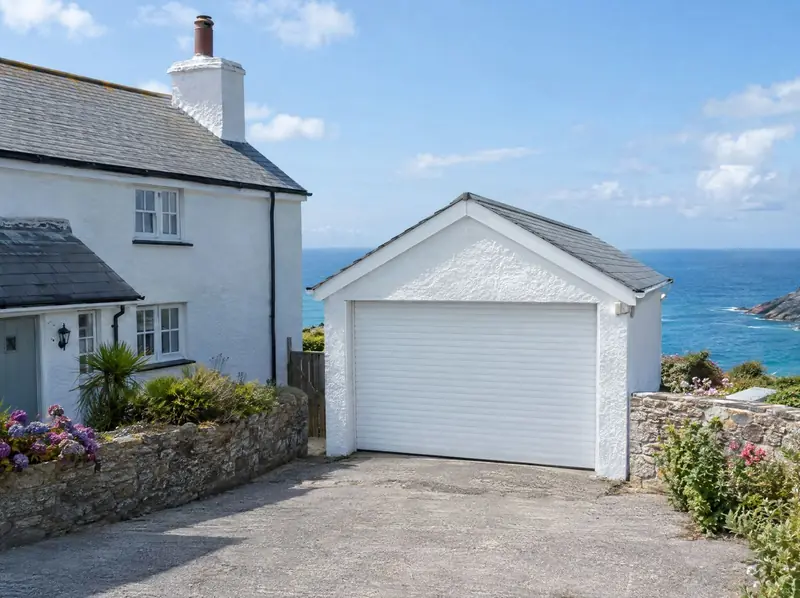 Computer-generated image
Are roller garage doors suitable for coastal homes?
Yes, roller garage doors are suitable for coastal homes, provided they're specified for salt air and looked after. Salt carried on the wind settles on the laths, guides, bottom rail and fixings, and it speeds up corrosion wherever bare metal is exposed or a coating is damaged.
Aluminium laths with a factory-applied coating are a sensible starting point near the sea. The details matter as much as the door itself: the fixings, how the guides are sealed and how easy the door is to rinse. Our aluminium roller garage doors page explains the lath options.
Which coating should I choose for a door near the sea?
Choose a factory-applied coating from the manufacturer's range and ask what the manufacturer says about coastal locations. Some manufacturers have specific guidance or warranty conditions for doors near the sea, such as cleaning requirements, and the manufacturer's warranty terms for your door and motor are set out in writing in your quote.
Steel doors can be used near the coast, but they depend entirely on their coating, so any chip or scratch needs attention quickly. If you're considering a bespoke colour outside the manufacturer's range, that's priced on survey, and it's worth asking how that finish is expected to cope with salt air before you commit.
Why do fixings matter in salt air?
Fixings matter because they're often the first part to corrode, and a corroded fixing can loosen a guide rail or stain the wall below it. Stainless steel fixings resist corrosion much better than plain or zinc-plated steel in salt air.
On coastal sites we specify stainless fixings for the guides and box where the manufacturer's system allows. We also look at where the control box, keypad and any key switch go, keeping exposed controls out of the worst of the wind and spray where possible.
If you're replacing an old door, check the condition of the existing fixings and any steel lintel at the survey too. Corrosion on the lintel is worth dealing with before a new box is fixed to it, and any repair is priced on survey.
How should I look after a roller door near the sea?
Rinse the door, guides and bottom rail with fresh water regularly, and more often after storms or strong onshore winds. That washes away salt and sand before they build up.
- Clean grit and sand out of the guide rails and brush seals so the curtain runs freely.
- Don't oil the guides unless the manufacturer says so; many specify a dry or silicone lubricant only.
- Test the safety edge and photocells monthly, and wipe the photocell lenses clean.
- Look for chips in the coating and deal with them early.
A roller garage door service is a good way to have the moving parts checked, and our maintenance guide has a fuller checklist.
Will wind-driven rain and sand get past the door?
A roller door reduces wind-driven rain and sand but doesn't make the garage watertight. Brush seals in the guide rails and a seal along the bottom rail close the main gaps, and keeping them in good condition helps on an exposed site.
The floor matters too. If the floor across the opening is uneven, the bottom seal can't sit evenly and water and sand get underneath. Levelling the floor or adding a threshold is priced on survey. On exposed sites with wide openings, the lath size and guides are chosen within the manufacturer's limits for the width.
Questions
How often should I rinse a roller door near the sea?
There's no single rule, so start with the manufacturer's care guidance for your door. On an exposed site, a regular freshwater rinse of the laths, guides and bottom rail, plus an extra rinse after storms or strong onshore winds, keeps salt and sand from building up. If the manufacturer's warranty has cleaning conditions for coastal locations, follow those and keep a note of when you do it.
Is an electric motor all right in salt air?
Yes, in normal use. The tubular motor sits inside the barrel, within the box and out of direct weather, and the control box is fitted inside the garage. The parts most exposed are outdoor keypads, key switches and photocells, so we position them with as much shelter as practical, and it's worth having them checked at a service.
Does living near the sea affect the warranty?
It can. The manufacturer's warranty terms for the door and motor are set out in writing in your quote, and some include conditions for coastal locations, such as regular cleaning. Read those terms before you order and keep a simple record of rinsing and servicing. Your rights under the Consumer Rights Act 2015 apply alongside the warranty.
Doors and services that suit
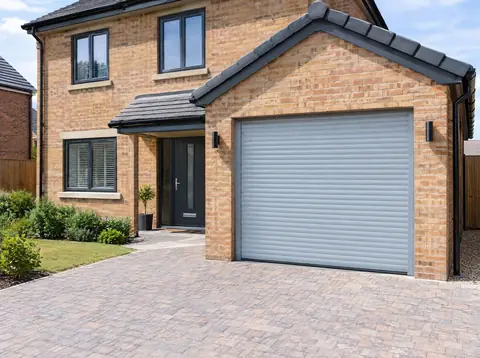 Aluminium roller garage doors
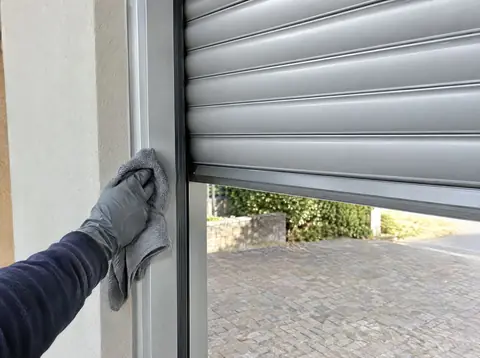 Roller garage door servicing
 Insulated roller garage doors
 Coloured and woodgrain roller garage doors
Last reviewed 25 October 2026
Want a price for your garage?
Four questions, a guide price straight away.