Fitting, replacement and upgrades
Up-and-over to roller door conversion
An up-and-over to roller door conversion replaces a single-panel door that tilts out and up with a roller door whose curtain coils into a box above the opening. The old door and its frame come out, or the frame stays if it's sound, the lintel and reveals are checked, and the new door is fitted behind the opening. The survey and written quote are free.
- Guide price
- from £1,195 inc VAT
- First step
- Free survey
- Covers
- England, Wales, Scotland and Northern Ireland
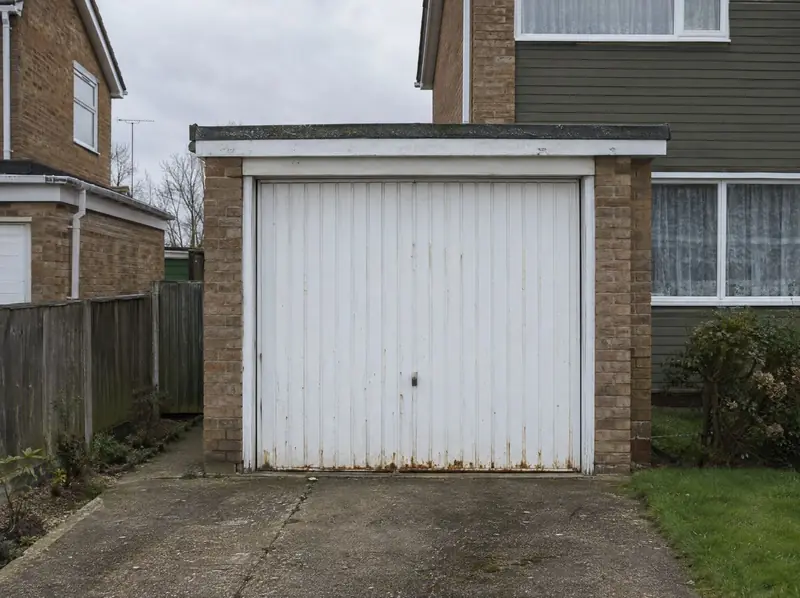 Computer-generated image
An up-and-over to roller door conversion replaces a single-panel door that tilts out and up with a roller door whose curtain coils into a box above the opening. The old door and its frame come out, or the frame stays if it's sound, the lintel and reveals are checked, and the new door is fitted behind the opening. The survey and written quote are free.
- No swing-out panel, so you can park closer and still open the door fully
- No tracks or arms across the garage ceiling, so the roof space is free
- Clear width may improve slightly, as there are no swing-out arms at the sides
- Lintel, reveals and headroom checked at a free survey, extra work priced first
Can any up-and-over garage door be converted to a roller door?
An up-and-over opening can usually take a roller door, provided there's enough headroom for the box and enough side room for the guide rails.
Those two measurements decide it. Headroom above the opening lets the box sit behind the lintel, and side room, typically around 75–100 mm each side, takes the guides. Box sizes vary with door height and lath size, roughly 205–300 mm or more on domestic doors.
If the headroom inside is short, the box can go under the lintel, which reduces the clear opening height, or on the front of the wall as a face-fit. If the reveals are uneven or the lintel is in poor condition, that work can be included in the job and is priced on survey. Our guide to converting up-and-over to roller covers the checks in more detail.
What's different about a roller door compared with an up-and-over?
A roller door opens straight up into a box, so nothing swings out over the drive and nothing hangs from the garage ceiling.
With an up-and-over, you stand back while the panel tilts out, and a car parked close to the door blocks it. The tracks and arms also take up the roof space inside the garage. A roller door removes both problems: you can park nearer the door, and the ceiling is free for shelving, storage or lighting.
Because there are no swing-out arms at the sides, the clear width can improve slightly. Roller doors are also available with insulated laths, which reduce heat loss, draughts and noise compared with an uninsulated panel, and with a motor, remotes and safety devices. For a wider comparison that includes sectional doors, our roller, up-and-over and sectional guide sets them side by side.
What does the conversion work involve?
The conversion has four stages: removing the up-and-over door, preparing the opening, fitting the roller door and commissioning it.
- Removal. The up-and-over panel, its springs or counterweights, tracks and arms come out and are taken away. The frame is removed too, unless it's sound and worth keeping as a neat finish to the opening.
- Preparing the opening. We check the lintel and reveals, make good old fixing points and confirm the floor is level where the bottom rail will sit.
- Fitting. The box goes behind the lintel and the guide rails are fixed to the reveals. The curtain is fitted and run to check it travels smoothly.
- Commissioning. On an electric door, the limits and safety devices are set, the closing force is tested to BS EN 12453, and you receive the Declaration of Conformity.
You're shown how to use the remotes and the manual override before the fitters leave.
How much does it cost to convert an up-and-over door to a roller door?
Converting costs the same as buying a new roller door, because every door price includes removing and disposing of your old up-and-over door.
- Insulated electric roller door, single opening up to 2.4 m: £1,495–£2,295 inc VAT
- Single-skin electric roller door, single opening up to 2.4 m: £1,195–£1,745 inc VAT
- Insulated electric roller door, double opening 3.0–4.0 m: £2,195–£3,295 inc VAT
Work outside the door price is quoted separately and shown before you agree: a new lintel, building out the reveals, or a power supply where there's none near the box. Colours outside the standard range and openings wider than 5.5 m are priced on survey too. All home prices include VAT at the standard 20% rate.
What happens at the free conversion survey?
At the free survey we measure the opening and check whether it's ready for a roller door, then send you a written quote.
We look at:
- the width and height of the opening, with and without the old frame
- headroom above the opening for the box
- side room for the guide rails
- the lintel, reveals and floor level
- the condition of the up-and-over frame, to decide whether it stays
- power near the box position, if you want an electric door
Your quote shows the door, removal and disposal, and any extra work as separate lines, so you can see exactly what you're paying for. Once you accept it, the fitting date is confirmed in writing and depends on installer availability. If you'd like a figure before the survey, start with a guide price on our quote page.
Guide prices for up-and-over to roller door conversion
Guide prices for homes, supplied and fitted, including removal of an old roller or up-and-over door. The written quote after your free survey is the price.
| Item | Guide price (inc VAT) | Ex VAT |
|---|---|---|
| Insulated electric roller door, single up to 2.4 m | £1,495–£2,295 | £1,245.83–£1,912.50 + VAT |
| Electric single-skin roller door, single up to 2.4 m | £1,195–£1,745 | £995.83–£1,454.17 + VAT |
| Insulated electric roller door, double 3.0–4.0 m | £2,195–£3,295 | £1,829.17–£2,745.83 + VAT |
Guide prices for homes, last reviewed 25 October 2026. Your written quote is the price. See the full price list.
What happens after I ask for a price?
- STEP 01
Guide price
Answer four quick questions online and see a price range for your opening.
- STEP 02
Free survey
We measure the opening, headroom, side room, lintel and power, and talk through options.
- STEP 03
Written quote
You get the price inc VAT, what is included and the payment stages in writing.
- STEP 04
Fitting day
Old door out, new door in, commissioned and handed over with the paperwork.
Questions about up-and-over to roller door conversion
Will I lose height in the opening with a roller door?
Not usually, if the box can sit behind the lintel inside the garage, which is the normal position. If there's too little headroom inside, the box can go under the lintel, which does reduce the clear opening height, or be face-fixed on the front of the wall. We measure this at the survey and tell you before you commit.
Can you keep my existing up-and-over frame?
Sometimes. If the frame is sound, square and securely fixed, it can stay as a finish around the opening and the roller door is fitted to suit it. If it's rotten, damaged or out of square, we take it out and prepare the opening for the new door. The survey decides which applies to your garage.
Does a roller door need more headroom than an up-and-over?
A roller door needs headroom above the opening for its box, while an up-and-over needs space inside the garage for its tracks and for the panel when it's open. Domestic roller boxes are commonly around 205 to 300 mm or more, depending on door height and lath size. If there isn't room behind the lintel, other box positions are possible.
Is converting from up-and-over to roller worth it?
It depends on how you use the garage and the drive. A roller door doesn't swing out, so you can park closer; it frees the garage ceiling; and insulated laths cut draughts and noise compared with an uninsulated panel. The free survey and written quote give you the actual figure to weigh against those benefits.
Do I need planning permission to change to a roller door?
Changing the door on an existing garage opening usually doesn't need planning permission, but conservation areas, listed buildings, flats, and estates with planning conditions or covenants can be different. If any of those apply, check with your council or management company before you book. Our guide on planning permission and building regulations explains the questions to ask.
Related doors and services
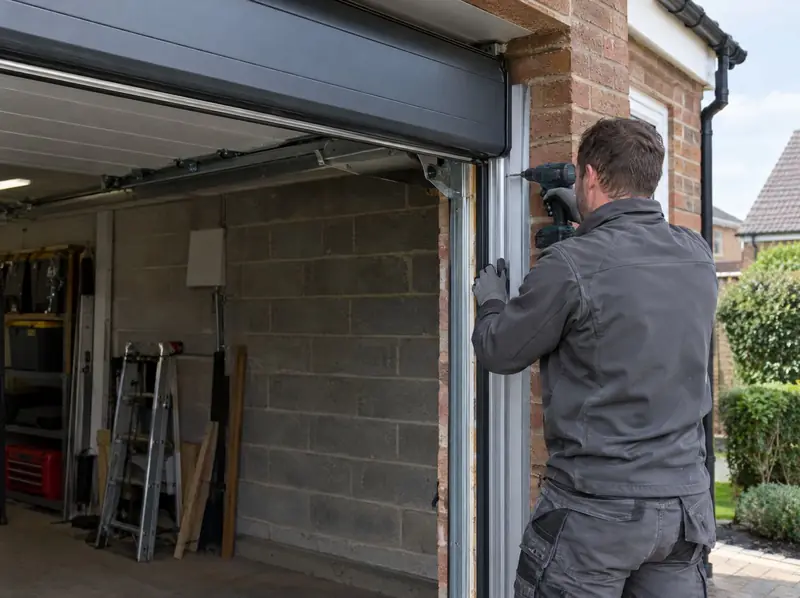
Roller garage door installation
New roller garage doors supplied and fitted to your opening, measured at a free survey.
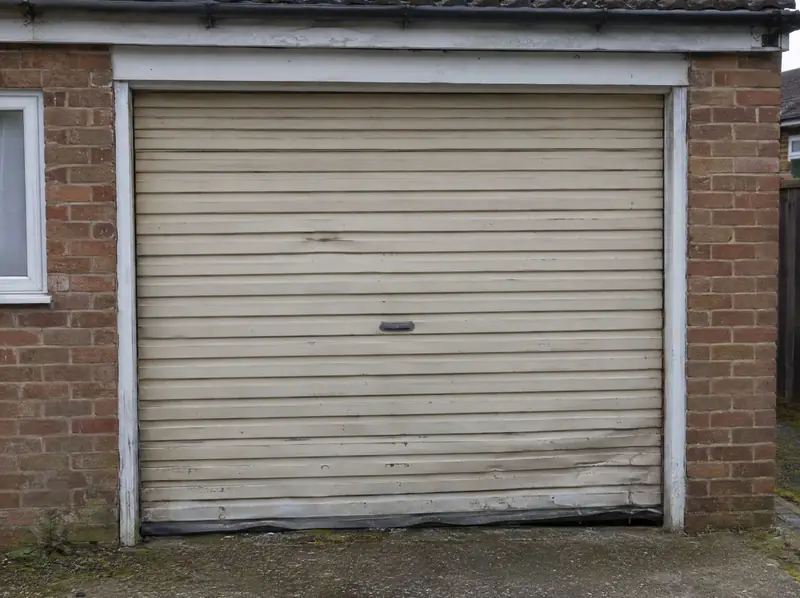
Roller garage door replacement
Swap a worn, noisy or draughty roller door for a new one, with the old door taken away.
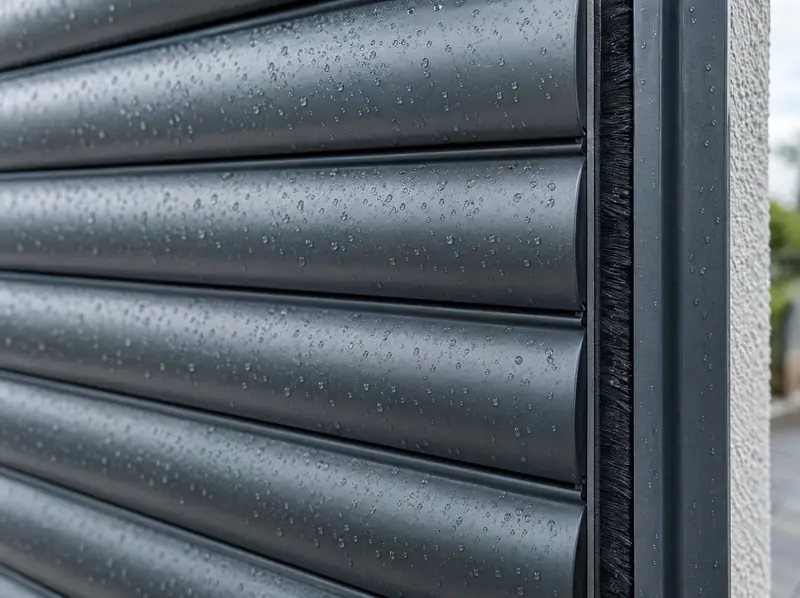
Insulated roller garage doors
Foam-filled double-skin aluminium laths that cut heat loss, draughts and noise through the opening.
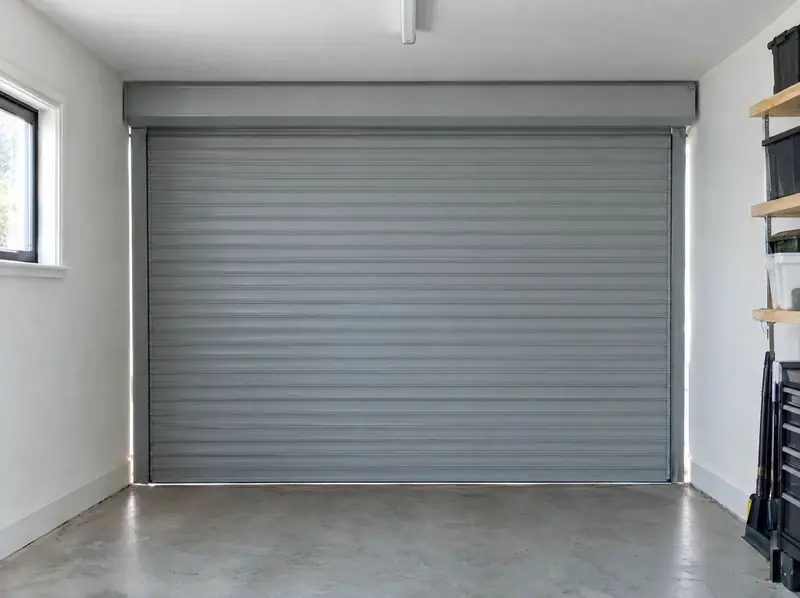
Low-headroom roller garage doors
Roller doors for garages with little space above the opening, using box position and lath size.
Where do you provide up-and-over to roller door conversion?
Choose your county or region for local details and towns.
- Bedfordshire
- Berkshire
- Bristol
- Buckinghamshire
- Cambridgeshire
- Cheshire
- Cornwall
- County Durham
- Cumbria
- Derbyshire
- Devon
- Dorset
- East Riding of Yorkshire
- East Sussex
- Essex
- Gloucestershire
- Greater London
- Greater Manchester
- Hampshire
- Herefordshire
- Hertfordshire
- Isle of Wight
- Kent
- Lancashire
- Leicestershire
- Lincolnshire
- Merseyside
- Norfolk
- North Yorkshire
- Northamptonshire
- Northumberland
- Nottinghamshire
- Oxfordshire
- Rutland
- Shropshire
- Somerset
- South Yorkshire
- Staffordshire
- Suffolk
- Surrey
- Tyne and Wear
- Warwickshire
- West Midlands
- West Sussex
- West Yorkshire
- Wiltshire
- Worcestershire
- Clwyd
- Dyfed
- Gwent
- Gwynedd
- Mid Glamorgan
- Powys
- South Glamorgan
- West Glamorgan
- Aberdeen and Aberdeenshire
- Ayrshire
- Dumfries and Galloway
- Dunbartonshire and Argyll
- Dundee and Angus
- Edinburgh and the Lothians
- Fife
- Greater Glasgow
- Highlands, Moray and Islands
- Lanarkshire
- Perth and Kinross
- Renfrewshire and Inverclyde
- Scottish Borders
- Stirling, Falkirk and Clackmannanshire
- County Antrim
- County Armagh
- County Down
- County Fermanagh
- County Londonderry
- County Tyrone
Ready to price up-and-over to roller door conversion?
See a guide price in four steps, then book a free survey.