
Buyer guide
Roller, up-and-over or sectional: which garage door suits you?
A roller door coils into a box above the opening, so it leaves the ceiling clear and never swings out over the drive. A sectional door also opens straight up but runs back on ceiling tracks, while an up-and-over door tilts out and up. Rollers suit short drives and garages full of storage, but a sectional or up-and-over can suit some looks and openings better.
How do roller, up-and-over and sectional doors work?
A roller door is a curtain of horizontal laths that coils onto a barrel in a box above the opening, a sectional door is a set of hinged panels that runs up and back along ceiling tracks, and an up-and-over door is a single panel that tilts outwards and slides up into the garage.
All three can be manual or electric. The difference is where the door goes when it opens. A roller keeps everything in the box at the top of the opening, with two guide rails down the sides. A sectional parks its panels flat under the ceiling. An up-and-over swings out over the drive as it opens and then sits under the ceiling, either fully inside on tracks or partly projecting, depending on the design.
How do they compare side by side?
Each type trades space, looks, insulation and cost differently, so the right choice depends on your garage and how you use it.
| Factor | Roller | Sectional | Up-and-over |
|---|---|---|---|
| Ceiling space | Left clear; the door coils into a box | Taken by tracks and the open door | Taken by the open door |
| Drive space | None needed | None needed | Swings out as it opens |
| Room above the opening | Space for the box, roughly 205 to 300 mm or more, or a face-fixed box | Space for tracks and springs; low-headroom versions exist | Usually little |
| Insulation | Foam-filled laths available | Panels are often thicker and insulated | Often single-skin unless an insulated model is chosen |
| Security | Some models certificated to LPS 1175 or STS 202 | Varies by model | Varies by model |
| Looks | Ribbed horizontal laths | Wide panels in many styles | Wide choice of patterns, including timber-look |
| Wide openings | Up to 5.5 m in our price list | Suit wide openings | Single wide panels get heavy |
| Upkeep | Keep guides clean, test safety devices | Springs, cables, rollers and tracks | Springs or counterbalance gear and pivots |
We only supply and fit roller doors, so we don't publish prices for the other two types. Our roller door cost guide shows what a roller door costs at each width.
Which garage door saves the most space?
A roller door usually saves the most space, because it needs no ceiling area inside and no room on the drive outside.
That matters if you store bikes, shelving or a freezer in the garage, or want a loft hatch or storage racks overhead. It also helps on a short drive, where an up-and-over door can swing into a parked car or force you to stop well back from the garage. A sectional door also opens straight up, so it saves drive space too, but its tracks run back across the ceiling.
The trade-off is the roller box. It needs room above or behind the lintel, and if there isn't any the box can be fitted on the front of the wall instead, which is visible from outside.
Which type is warmest and most secure?
For warmth, an insulated roller or a sectional door with insulated panels is better than a single-skin up-and-over, and for security the rating of the individual model matters more than the type.
Insulated roller laths are double-skinned aluminium filled with polyurethane foam, which cuts draughts, noise and heat loss compared with single-skin laths. Sectional panels are often thicker still, which is worth weighing if the garage is used as a gym or workshop. Neither makes the garage part of your home's insulated envelope.
On security, some roller door models are tested and certificated to LPS 1175 or STS 202 by the manufacturer. If security is your main concern, ask any supplier for the certificate for the exact model they're quoting. Our security ratings guide explains how to read one.
When might a sectional or up-and-over door suit you better?
A roller door isn't always the best choice, and a sectional or up-and-over door can suit you better in a few situations.
- You want a panelled or timber look. Ribbed horizontal laths can look out of place on some period homes or on an estate where every garage has a matching panelled door.
- Planning conditions or covenants control appearance. If the rules require the garage door to match the original design, a roller may not be allowed.
- There's no room for a box and a face-fixed box isn't acceptable. A sectional with low-headroom tracks or an up-and-over may fit where a roller box can't go.
- You want thicker insulated panels and don't mind giving up ceiling space.
If one of these applies, it's worth getting advice on the other types before you decide.
Should I replace an up-and-over door with a roller door?
Replacing an up-and-over door with a roller door makes sense if you want a clear ceiling, a door that doesn't swing out over the drive or an easy route to an electric door.
The old door and frame come out, the lintel and reveals are checked, and the roller box goes behind the lintel with the guides fixed to the reveals. Removing the old frame and swing-out arms can even give you a little more clear width. Our conversion guide covers what happens on the day.
Questions
Is a roller garage door better than an up-and-over?
It depends on what matters to you. A roller door leaves the ceiling clear, doesn't swing out over the drive and is easy to motorise, which suits short drives and garages used for storage. An up-and-over door offers a wider choice of traditional and timber-look designs and needs little room above the opening, which can suit some period homes or estates with rules on appearance.
Do roller doors need more headroom than sectional doors?
They need a different kind of space. A roller needs room for its box, roughly 205 to 300 mm or more depending on the door height and lath size, either behind the lintel or on the front of the wall. A sectional needs room for its tracks and springs above the opening and space under the ceiling for the open panels. Low-headroom versions of both exist.
Can a roller door be fitted to a wide double garage?
Yes. Our price list covers roller doors up to 5.5 m wide, and wider openings are priced on survey. Wider doors usually use larger laths for rigidity and a motor sized to the weight of the curtain. If you want to remove a central pillar to make one wide opening, that is structural work that needs approval and is priced separately.
Related doors and services
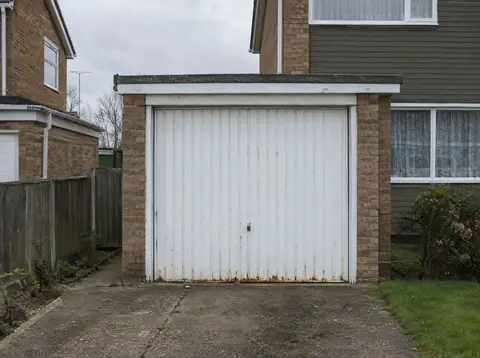 Up-and-over to roller door conversion
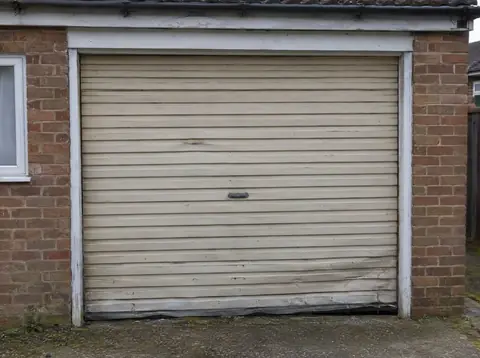 Roller garage door replacement
 Insulated roller garage doors
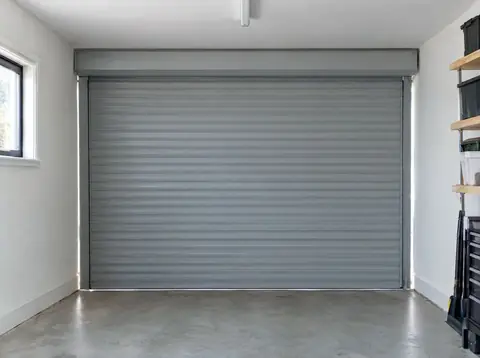 Low-headroom roller garage doors
More guides
Last reviewed 25 October 2026
Want a price for your garage?
Four questions, a guide price straight away.